
For one team that needs member records, scheduling, basic billing, forms, and lead capture.
GrowRunGet paid
Choose a starting package, then scope rollout, migration, integrations, and payment processing with the HexaFit team.
Professional adds the operating depth for growing multi-team businesses.
Enterprise adds procurement review, rollout governance, and portfolio controls.
Starter and Growth stay visible for lean launches before a larger migration.
Compare all packagesPrices are starting points for software access. Final scope depends on rollout needs.

Each track starts with software scope. Final proposals confirm rollout, payment review, hardware, migration, support, and term details. The full outcome model lives on the Features page.
For one team that needs member records, scheduling, basic billing, forms, and lead capture.
For teams adding CRM, campaigns, billing recovery, POS, reports, and staff workflow discipline.
For operators adding access workflows, device needs, automation, advanced reporting, and multi-team work.
For franchise, multi-location, procurement, migration, governance, and security review.
Procurement clarity
HexaFit separates subscription, rollout, processing, hardware, and support assumptions so buyers can compare total cost without guessing what is included.
Selected plan, active locations, user scope, modules, reporting, and support tier.
Discovery, configuration, data migration, staff enablement, launch support, and post-launch review.
Merchant-account setup, processor costs, SMS/email usage, and communication provider costs stay separate.
Kiosks, POS, scanners, door access, body scanners, accounting, data exports, APIs, or custom integrations.
HexaFit does not promise a universal discount on the public page. Finance can request these discount categories during proposal review.
Buyer shares location count, legal entities, current tools, devices, and target launch date.
HexaFit separates plan, implementation, migration, payment, hardware, support, and integration work.
Finance, legal, IT, and operations review the proposal, data-processing terms, vendors, and status path.
The final order confirms term, billing cadence, rollout milestones, support path, and payment boundaries.
Monthly or annual subscription path, renewal date, cancellation language, and support tier.
Locations, staff enablement, migration, launch coverage, and post-launch review.
Processing, messaging, hardware, access devices, and any customer-specific integrations.
Monthly and annual options are reviewed during scoping. Annual terms are quoted after location count and rollout scope are confirmed.
Software subscription, implementation, payment processing, hardware, SMS/email usage, and custom services are separated for finance review.
Contract length, renewal timing, cancellation language, and support expectations are confirmed in the proposal or order form.
Enterprise proposals include scope assumptions, rollout milestones, security links, DPA/subprocessor paths, support terms, and approval gates.
Technical buyer overview
HexaFit does not require buyers to read API documentation before they understand fit. Start with the systems, roles, devices, data, and reports that need to connect.
Imports, exports, reports, and migration files are scoped before launch.
Accounting, CRM, website, analytics, access devices, kiosks, and POS paths are reviewed by workflow.
Owner, manager, staff, coach, support, and location access are mapped before rollout.
Leads, memberships, payments, visits, and exceptions can feed reports or downstream review.
Worked examples
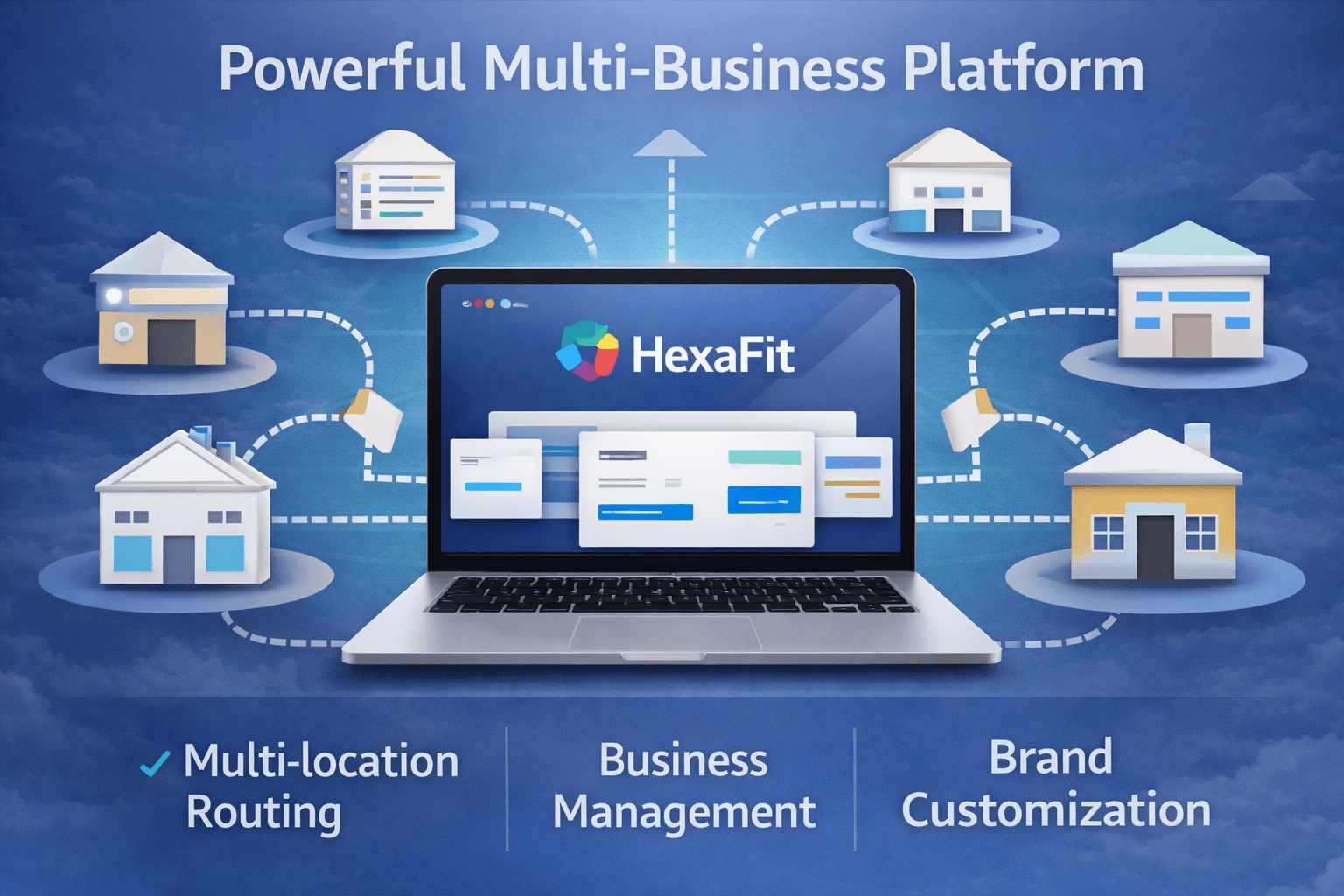
These examples use HexaFit's platform model: organization to legal entity to location to merchant account. This is not a final quote; it shows what finance should expect to review.
Good fit when the buyer wants a clear monthly software path and a simple payment setup before adding devices.
Finance can review one legal/payment identity while operations still get location-level control and reporting.
Best when the buyer needs centralized operations without mixing underwriting, bank accounts, or merchant liability.
The quote separates software from payment economics so owners can see what HexaFit controls and what processors charge.
Exact scope is confirmed with the HexaFit team, but most buyers can identify their starting track from location count, workflow depth, and rollout needs.
Best when one team needs memberships, scheduling, billing, lead capture, and client self-service.
Best when the business has multiple revenue lines, staff workflows, POS, campaigns, and reports.
Best when locations need shared standards, separate permissions, rollout support, and portfolio reporting.
Best when migration, integrations, access hardware, payment scope, and security review need a tailored plan.
Most buyers can choose the right evaluation path from location count, workflow depth, devices, and review needs.
Jump to Feature TableUse this path when you need memberships, scheduling, billing basics, lead capture, and client self-service.
Use this path when CRM, campaigns, billing recovery, POS, and reporting are becoming daily needs.
Use this path when access control, equipment rules, automation, and multi-team workflows matter.
Use this path when rollout, integrations, security review, migration, and portfolio reporting need a plan.
Commercial tracks
Starter, Growth, Professional, and Enterprise make evaluation simple.
$149/mo
For new or single-location operators that need a cleaner foundation for memberships, scheduling, payments, and client self-service.
Independent gyms, trainers, studios, and wellness providers replacing spreadsheets or a basic booking tool.
$299/mo
For growing businesses that need stronger CRM, marketing automation, recurring revenue, POS, retention, and staff workflows.
Studios, gyms, recovery centers, spas, and clinics ready to increase sales and reduce manual admin.
$599/mo
For operators with multiple revenue lines, device workflows, access control, recovery equipment, and more advanced automation needs.
High-volume fitness, wellness, recovery, and service businesses with more operational complexity.
Custom
For franchise, multi-location, and platform-level buyers that need central control, migration planning, integrations, governance, and custom rollout.
Franchises, multi-club operators, enterprise wellness groups, and service brands coordinating rollout across locations.
Included at each tier
Use this table to find the right starting point. Final pricing still depends on migration, payment scope, integrations, hardware, and rollout support.
Memberships, bookings, billing basics, and a branded customer path.
CRM, campaigns, stronger recovery, more reporting, and launch guidance.
Access workflows, advanced automation, staff controls, and expanded rollout support.
Portfolio governance, custom rollout, security review, integrations, and migration planning.
Pricing notes
Included in the rollout
Discovery, configuration, migration, and enablement stay visible.
Current stack review, business-model fit mapping, rollout sequencing, and launch planning.
Platform setup, operational structure, staff guidance, and customer-facing workflow alignment.
Data movement, phased rollout options, enterprise integration planning, and post-launch growth mapping.
What shapes scope
Workflow depth, rollout shape, and migration needs drive scope.
Memberships, appointments, POS, access, CRM, and portfolio workflows shape scope.
Single-site launches and franchise rollouts need different plans.
Current tools, integrations, and data migration shape the plan.
Buyer proof
Approved customer stories will show which package, rollout model, and measurable outcome matched each operator.
How the operator moved from scattered tools to one working operating model.
Recovered revenue, faster rollout, less admin work, or stronger retention.
A story from the same type of business, location model, and buyer stage.
The customer is live with real staff, locations, and workflows.
Recovery, retention, rollout speed, or admin time saved is documented.
The final quote, logo, metric, and attribution are approved before publishing.
Buyer review
Buyers can review security, privacy, SMS terms, DPA readiness, integrations, status, and plan fit without waiting for a proposal.
Pricing review path
Pricing should help buyers understand package fit, rollout scope, legal review, and the product workflow before a proposal.
Location count, devices, access, reporting, migration, and integrations shape scope.
Each package connects to the operating journey buyers saw in the walkthrough.
Privacy, terms, SMS, DPA, security, and status links stay visible before the call.
Trust, pricing, and legal review paths stay visible before commitment.
Pricing FAQ
Short answers before a tailored proposal.
Pricing reflects operating complexity, rollout scope, business model mix, and the systems HexaFit replaces.
Yes. Buyers can review monthly or annual billing. Any annual discount is scope-based and confirmed in the proposal after locations, modules, and rollout needs are known.
The quote should separate software subscription, implementation, payment processing, messaging usage, hardware, integrations, support assumptions, term, renewal, and rollout milestones.
Pricing is scoped by operating model, location rollout, legal-entity structure, merchant-account needs, governance, reporting, integrations, and support expectations.
Location count matters, but workflow depth, migration needs, access complexity, and integrations matter more.
Yes. Most teams launch the highest-value workflows first, then expand into more locations and controls.
It should show subscription term, scope assumptions, rollout shape, included workflows, implementation line items, processing boundaries, and extra migration or integration work.